A hailstorm rolls through Travis County in April. You look at the roof from the driveway, see nothing obviously wrong, and move on. In October a neighbor mentions their carrier just paid for a full replacement from that same storm, and suddenly you are wondering whether you still have time.
The short answer is that you probably do, but not for the reason most homeowners assume. Texas gives you two years to sue an insurance company on a denied or underpaid claim. Your policy gives you something much shorter and much vaguer, and that is the deadline people actually miss.
What the Texas roof insurance claim deadline actually is
Texas Civil Practice and Remedies Code section 16.003 sets a two-year limitations period for filing suit on a property insurance claim. Courts have generally run that clock from the date of loss, not the date your carrier denied you. That distinction matters more than almost anything else in this article.
If hail hit your roof on April 12 and the insurance company denied the roof insurance claim the following January, your two years did not restart in January. You are working against the storm date. A homeowner who spends eight months getting second opinions before filing has already burned a third of the window.
Some policies attempt to shorten this period contractually. Texas law limits how far an insurance company can go, and the Texas Department of Insurance publishes guidance on these provisions, but the language on your declarations page is worth reading rather than assuming.
Your policy’s prompt-notice clause is a separate, shorter clock
Nearly every Texas homeowners policy requires you to give notice of a loss “as soon as practicable.” There is no number attached to that phrase. There is no 30-day or 90-day marker you can point to. That vagueness is the problem.
A carrier can accept that you are inside the two-year statute and still deny the insurance claim on late notice, if it can show the delay caused it real prejudice. The usual argument is that months of additional weather made it impossible to separate the original hail event from everything that came after.
This is the part that catches people. The statute is generous. The notice clause is not, and it is the one that bites first. A homeowner sitting on visible storm damage for a year has a two-year statute and a serious prompt-notice problem at the same time.
What Chapter 542A changed for Texas roof claims
In 2017 the Texas Legislature added Chapter 542A to the Insurance Code, aimed squarely at weather-related claims. Two pieces of it affect your timeline.
First, before filing suit you must give the carrier at least 60 days’ written pre-suit notice describing the claim and the amount in dispute. That is 60 days you need to have available inside the two-year window, not on top of it.
Second, the chapter changed how attorney fees are calculated and let carriers accept responsibility for an agent’s conduct, which reshaped how these disputes get litigated. The practical effect for a homeowner is simple: the runway is shorter than two years, and waiting until month 23 to talk to anyone is not a plan.
Separately, Texas Insurance Code section 542.055 requires your insurance company to acknowledge the claim and begin its investigation within 15 days of receiving notice. Those obligations, and the rest of the claim process the Texas Department of Insurance describes, only start once you file.
Proving the date of loss when the damage is months old
The further you are from the storm, the more your claim depends on documentation rather than memory. Three things carry the weight.
Weather verification ties your roof to a specific event. The NOAA Storm Prediction Center storm reports log hail events by date, county and reported stone size. That record exists whether or not you filed in April.
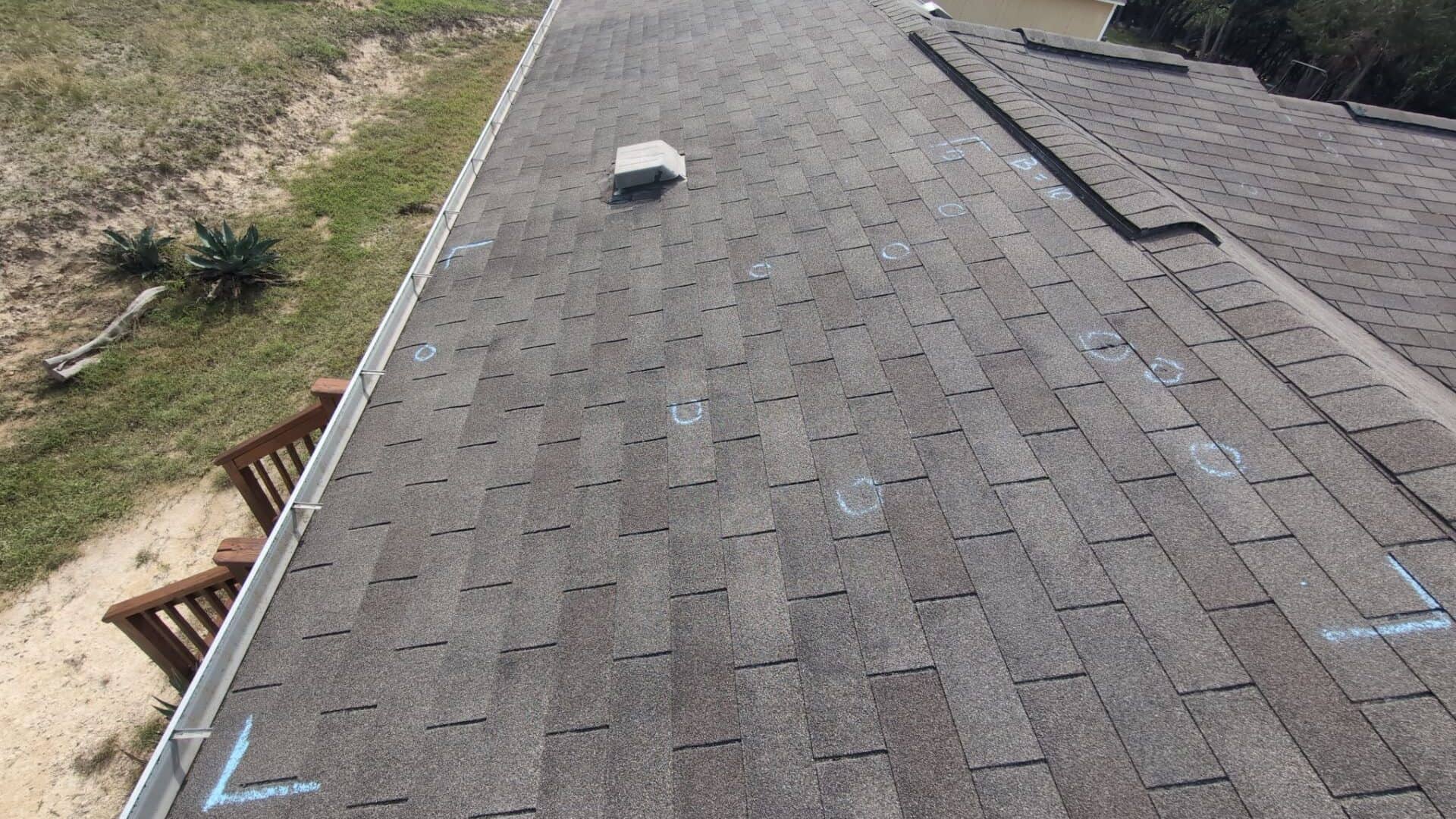
Physical documentation separates that storm from later ones. A chalked test square on each slope, photographed with a scale reference, shows the density and character of the impacts. Bruising from a single event tends to read differently than accumulated weathering, and a documented slope diagram makes that argument on paper instead of in conversation.
Collateral damage dates the event independently of the roof. Dented gutters, damaged HVAC condenser fins, marked window screens and soft-metal vents all took the same hail. When those line up with a logged storm date, the roof findings stop looking speculative.
Our crews run this documentation across Travis, Hays and Comal counties as standard practice on every documented roof inspection, because a report assembled six months after a storm has to do more work than one assembled the same week.
Where homeowners actually lose the insurance claim deadline
In our experience the window rarely closes because someone forgot. It closes for three specific reasons, and none of them involve the actual cost of the roof.
- Waiting for certainty before filing. Homeowners collect three roofing contractor opinions, then a fourth, and treat filing as the last step instead of an early one. Filing opens the insurance company’s obligations under section 542.055. It does not commit you to anything.
- Treating a denial as the end. A denial is a position, not a verdict. It is also the point where many people stop paying attention to a clock that never stopped running.
- Letting a driveway inspection substitute for documentation. A roofing contractor who knocks after a storm, walks the roof for ten minutes and leaves a verbal opinion has given you nothing you can file with, and no repair cost you can hold anyone to.
That last one is common enough after Central Texas hail events to be worth its own warning. If nobody wrote anything down and photographed it with a reference, the inspection did not happen in any sense a carrier cares about.
This is also where the question of an older roof surfaces. Age alone does not disqualify a claim in Texas, but it does change what your policy pays. If your roof is settled at actual cash value rather than replacement cost, the insurance company subtracts depreciation and the check reflects the roof’s value rather than the replacement cost of a new one. That is a function of how your coverage is written rather than how old the shingles are.
What to do if you are already close to the line
If the storm was more than a year ago, the sequence is compressed but still workable.
Get the damage documented now, with photographs, test squares and a written slope-by-slope report. File with your carrier rather than waiting for the report to be perfect. Ask the insurance company for its scope and repair cost estimate in writing, and keep every piece of correspondence with dates attached. If you are inside the final months of the statute, that is a conversation to have with an attorney, not a roofer.
What to say, and not say, to the insurance company’s adjuster
Be factual and be specific. Give the storm date, walk the adjuster through what was documented, and hand over the report. What you should not do is guess out loud. Speculating that the damage “might be from a few different storms” or that the roof “was probably getting old anyway” hands the carrier a characterization you cannot take back. Describe what you observed and let the documentation carry the argument.
Next Gen Roofing & Construction handles roof insurance claims in Texas the same way whether the storm was last month or last year: inspect the roof, document every slope, tie the findings to a verified weather event, and meet the adjuster on site with the report in hand. What the insurance company does with that documentation is its decision. Making sure the documentation exists, and exists in time, is ours. If you are working against a storm date you are not sure about, we serve homeowners across hail damage country from our offices in Austin and Wimberley, and the inspection is the place to start.