TPO roofing for low-slope buildings that work for a living
TPO has become the default membrane for commercial low-slope roofs for straightforward reasons: strong seams, honest pricing, and reflectivity that pays the cooling bill back every summer. Next Gen Roofing & Construction installs, repairs, and restores TPO systems across Central Texas on warehouses, offices, retail centers, multi-family buildings, and the flat sections of homes that carry them.
The energy math that sells itself
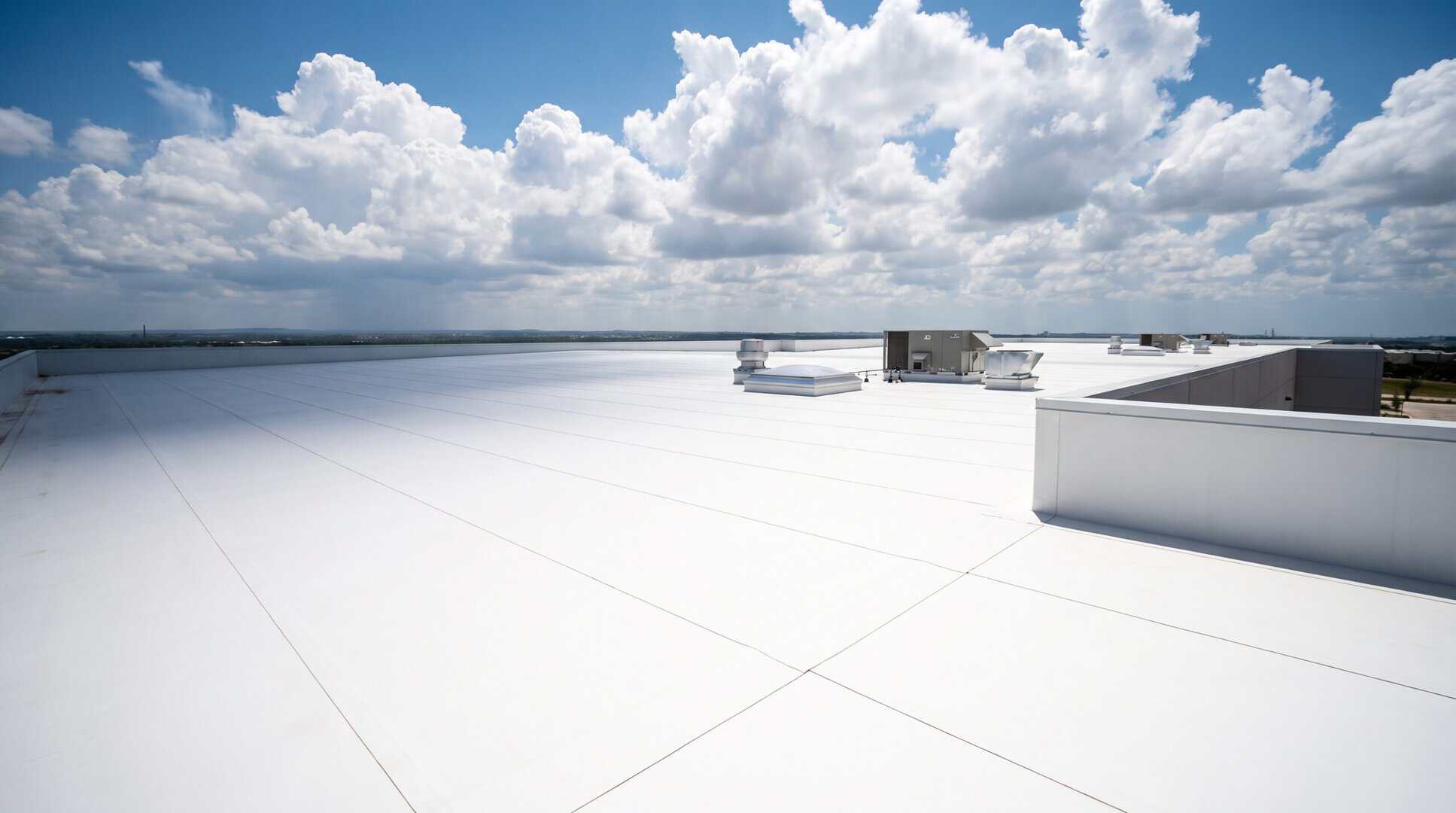
Bright TPO surfaces typically run 100 to 120 degrees under summer sun while conventional dark roofs hit 160 to 180, and that difference cuts cooling loads by 20 to 40 percent on many buildings through the long cooling season. On a big footprint the delta is real money every month, which is why TPO conversations start with the utility bill as often as the leak.
Membrane thickness, specified honestly
Most projects run 60-mil membranes, the balanced choice for durability and cost. Buildings with heavy rooftop equipment traffic, maintenance foot traffic, or harder service lives step up to 80-mil systems. Warranty terms scale with thickness and specification, commonly 15 to 30 years, and the specification we write names the mil, the attachment method, and the warranty it earns, so bids compare on facts.
TPO against the alternatives
PVC membranes offer excellent durability and chemical resistance but typically cost 15 to 25 percent more than TPO, earning their premium on restaurant roofs and chemical exposures. EPDM’s dark surface gives up the reflectivity advantage. Modified systems still make sense over some substrates. And when an existing membrane is sound but tired, a coating restoration can defer the whole conversation for a decade. The right answer is building-specific, and our assessment gives it to you with the reasoning attached.
Where TPO fails, and how ours does not
TPO failures concentrate at the details: seams welded at the wrong temperature, flashings improvised at penetrations, and ponding zones the drainage design ignored. Our installations run manufacturer-specified welding parameters with test welds documented, penetrations flashed with the system’s own components, and drainage corrected rather than inherited. Quality TPO systems resist tears and punctures while staying flexible across temperature swings for 20 to 30 years, but only when the details get that chance.
Repairs and restorations on existing TPO
Punctures, failed seams, and shrinkage at flashings are all repairable on a membrane with life left, and our commercial crews handle them with the same welding discipline as new installs. Aging TPO showing UV degradation but sound seams is the textbook coating candidate, resetting the clock at a fraction of replacement. Saturated insulation under a failed membrane is the honest replacement case, and a core sample settles the question before anyone spends real money.
Scoped for owners and managers
TPO decisions get made by people accountable to budgets, so our scopes read like decision documents: current condition with moisture data, the repair, restore, and replace paths priced over ten years, phasing that respects tenants and operations, and warranty terms in plain language. One accountable company from assessment through commercial roofing service life, which is how flat roofs stay boring, the way owners like them.
Installation day on an occupied building
Most TPO work happens over operating businesses and occupied units, so logistics are part of the specification: staging that keeps docks and entries clear, hot-work coordination where welding equipment requires it, odor and noise windows agreed with management, and daily tie-offs that leave the building watertight every night. The crews run occupied-building playbooks as a habit, which is why property managers who watch one project tend to book the next without bidding it.
Documentation your warranty depends on
TPO warranties are specification documents, and enforcement follows the paper: attachment patterns, weld test records, and manufacturer inspections where extended warranties require them. Every install here closes with the documentation package filed and duplicated to the building’s records, so the year-twelve warranty conversation starts with evidence instead of archaeology.
Starting a TPO project
Whether the trigger is a leak over inventory, a lease clause, or a utility bill that finally earned attention, the path in is one assessment visit: membrane condition, seam sampling, moisture scan, and the repair, restore, or replace comparison priced over ten years. Owners get a decision document they can circulate, and the schedule holds whichever path the evidence supports, with the crews and the welders already assigned.
What a TPO roof is and where it wins
A TPO roof is a single ply roofing membrane, a bright white sheet welded into one continuous waterproof surface across a low slope roof. The white TPO membrane reflects sunlight instead of absorbing it, which is why energy efficiency is the headline: cooler decks, lower cooling loads, and utility savings that compound every summer. As a roofing material, TPO hits the sweet spot of cost, performance, and speed for offices, retail, warehouses, and low slope additions, which is why we install TPO more than any other commercial roofing material.
How we install TPO roofing systems
- Inspection first: a roof inspection maps wet insulation and failed areas so the new roofing system starts dry.
- Tear off or overlay: we give a straight recommendation on whether the existing roof can host a recover board or needs to come off.
- Mechanically fastened or fully adhered: the roofing installation method is matched to the building, wind exposure, and budget.
- Hot air welded seams: every seam is welded and probe tested, because seams are where membranes fail.
- Detail work: penetrations, curbs, and edge metal flashed to spec, the difference between a 20 year roof and a 5 year problem.
Every TPO roofing installation carries a manufacturer material warranty plus our workmanship coverage, with maintenance plans that keep the warranty valid and catch small punctures before they become roof repair emergencies. Need numbers for a re roof or a roof replacement? Contact Next Gen Roofing & Construction for a free estimate on TPO roofing systems, and we will bring the material samples and the install schedule to the first meeting.
What happens when you call about tpo roofing
The fastest route to a real answer is a documented inspection. A certified crew photographs every plane, then gives a straight read on whether tpo roofing is the right call on your property right now, and what it would cost if it is.
Request the free inspection, or call (830) 330-1123 and we will find you a slot this week.