Roof insurance claims, run in the right order
A storm-damaged roof puts homeowners inside a process most people run once or twice in a lifetime, against a carrier that runs it every day. Next Gen Roofing & Construction levels that field. We document the damage the way adjusters need it, keep the sequence in the order that protects your claim, and build the approved scope to the same certified standard as our retail work.
The sequence that protects your payout
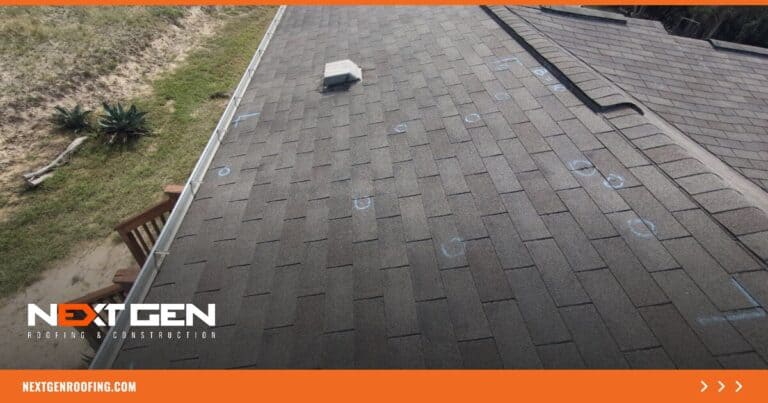
- Document first: a free inspection dated to the storm, with chalked test squares, soft-metal evidence, and per-slope photographs.
- File with evidence: the claim opens with the documentation attached, not a phone description.
- Meet the adjuster on the roof: our crew is up there with the findings organized the way the carrier’s report needs them.
- Agree the scope before building: line items settled in writing, supplements filed with evidence where the first scope missed damage.
- Build to spec: certified installation, registered warranty, and an invoice that matches the claim file.
What policies cover, in plain terms
Homeowner policies cover sudden storm damage, hail and wind, and exclude wear. The whole contest inside any roof claim is which one your roof shows, and the answer is documentary: strike density on test squares, creased tabs photographed at the nail line, and dated evidence tying damage to a weather event on the record. Age matters too, since carriers scrutinize older roofs harder and some policies pay actual cash value on them; knowing which policy language you hold changes strategy, and we read it with you before anything gets filed.
The mistakes that sink Texas roof claims
The claim killers are consistent: filing before documenting, signing an assignment with a door knocker the afternoon of the storm, letting wear and storm damage blur together in the file, and missing the deadline that runs from the storm date rather than the discovery date. Texas policies commonly allow one year from the date of loss, and late filings meet hard scrutiny. Every one of these is avoidable with sequence discipline, which is precisely the service.
At the adjuster meeting
The adjuster meeting is where a claim is actually decided, and homeowners should not attend it alone. Our crew arrives with chalk lines refreshed, strike counts ready, and the collateral evidence laid out in report order. Adjusters are professionals doing volume work after a storm; handing them organized evidence makes approving the right scope the easy path. Disagreements get handled with documentation and policy language, not volume, and supplements get filed the same way when opened roofs reveal what the first scope could not see.
Deductibles, honestly
Texas law is explicit: paying your deductible is required, and any contractor offering to waive or absorb it is committing insurance fraud and inviting you into it. We price storm work straight, the invoice matches the claim scope, and that protects you as much as us, because a claim built on a deductible scheme can be clawed back years later.
Every damage type, one discipline
Hail claims, wind claims, and the hybrid cases carrying both run through the same standard, and the file covers the full envelope: shingles, flashing, vents, gutters, and the wall surfaces below, because the storm did not stop at the roofline and the claim should not either. Whether the approved outcome is a repair or a full roof replacement, the build follows the same certified process, and impact-rated upgrade options get priced into the conversation while the carrier is already paying for the roof.
What this costs you
The inspection is free, the documentation is yours either way, and our claim support is part of doing the eventual work rather than a fee on top of it. If the damage does not justify filing, the report says so plainly, which protects your claim history for the storm that someday will. Straight answers at every station: that is the whole service, and it is why storm work built this company’s review record instead of denting it.
When carriers push back
Some claims meet a lowball scope or a denial that the evidence does not support, and the response is procedural, not emotional: a written rebuttal tied to the policy language, re-inspection requests with our documentation attached, and where a carrier holds an unreasonable line, the appraisal clause your policy already contains. Homeowners rarely know that clause exists; we do, and knowing when to invoke it is part of the file discipline that starts at the first inspection.
Storm damage documentation your insurance company respects
The difference between a paid approval and a denial usually comes down to evidence. Our roof inspection captures every hail damage bruise, every crease from straight line gusts, and every failed shingle with date stamped photos and a measured damage report. When the insurance company sends an adjuster, we meet them on your roof and walk the same evidence together so nothing gets missed or written off as wear.
Roof repair or full replacement, decided by the damage
Not every storm damage roof needs to be replaced, and we will not push a replacement your roof does not need. Isolated hail damage or a few failed shingles calls for targeted roof repairs. Widespread storm damage roof repair across multiple slopes usually justifies full replacement, and carriers know it. Either way you get a free roof inspection, a straight recommendation, and roofing work completed by the same local crews that handle our retail jobs, not a storm chaser who disappears after the check clears.
How to schedule your free roof inspection
Contact Next Gen Roofing & Construction as soon as the weather clears. A big storm puts thousands of homes in line for adjusters at once, and the earliest documented roofs settle fastest. We schedule most inspections within days, hand you the report the same week, and stay involved until the last shingle is nailed and the final invoice matches the approved scope. Wind damage, hail damage, fallen limbs, or a roof leak with no obvious cause, the estimate costs nothing and the documentation is yours to keep either way.
Our six step insurance claim process
The process below is the same one we have run on hundreds of storm damaged roofs, and it exists so nothing gets missed and nothing stalls.
- Property inspection: we inspect the full roof, photograph every bit of damage, and build the detailed report your claim will stand on.
- Filing the claim: if the damage justifies it, you file promptly and we help answer every question your insurance company asks along the way.
- Meeting the adjuster: your adjuster schedules an inspection and we attend it, walking the same evidence together so the assessment is complete. Even homeowners who hire someone else should have their roofer at that meeting.
- Reviewing the insurance report: when the adjuster estimate arrives, we check it line by line against what our inspection found before any work begins.
- The restoration work: repairs or full replacement proceed to the approved scope, by the same certified local crews that handle our retail projects.
- Closing out with your carrier: you sign a certificate of completion, and it goes to your insurance company with the detailed invoice, the paperwork that releases your final payment.
Roofs we install carry manufacturer coverage up to a non prorated 50 year warranty, and the documentation habit that wins claims is the same one that keeps warranties enforceable years later.
Start with a documented look at your roof
The fastest route to a real answer is a documented inspection. A certified crew photographs every plane, then gives a straight read on whether roof insurance claims is the right call on your property right now, and what it would cost if it is.
Ring (830) 330-1123 for the fastest answer, or book the inspection online and pick a time that suits you.